

Slow and Boring
The taste of a choice behind a story

Hey! Are you boring?
Someone once accidentally asked me that question and I didn’t know how to respond. I had never really thought about whether or not I consider myself to be an interesting person.
What even makes someone or something exciting in the first place?
There’s certainly no replacement for the freshness of sensations that comes with a first time. Novelty often reigns supreme, the undisputed champion of interest and excitement.
With the added value of youth and vigor, colors feel brighter, emotions cut deeper, and food holds its flavor longer.
In some ways, boredom comes from sanding down those rough edges. Maturity defined as a dimming of our once bright light, enthusiasm calming into gentle waves lulling us into peaceful sleep.

Before diving into the thick of it, I wanted to get through a brief, tangentially relevant promo.
StampFans is also a new adventure and it still has the freshness of those flavors found in novelty.
If you’d like to receive a handwritten letter from me, be sure to sign up before tomorrow!
Emotional Core
When a story impacts us, it’s hard to fully understand why. There’s a grip that goes beyond words in the way an emotional wound festers.
Once the bandages are set, only then is any attempt made to understand our visceral reactions.
And thus, qualitative judgment is an exercise in wading through vagueness. That isn’t a flaw or a fault, but a requirement.
Sifting through the mess of our emotions will never be more than muddy waters. The mind is a swamp infested with our deepest desires and loftiest goals. Dreams we can’t understand ourselves and yet for some reason those manifestations of utter nonsense are the very things that make life worth living at all.
Thus, when it comes to telling stories, the emotion that holds the most weight will be irrational and personal.
The strongest deciding factor behind whether a reader, a watcher, a listener, or an audience member will enjoy a story is little more than random chance.
Of course, it’s possible to cater to specific emotions to flip the odds in your favor, but that’s playing a rigged game. Although the smartest way to win any bet is indeed to make sure the fix is in.
Rather than the shadiness of those dark alleys, this is meant more to be a reflection of the other side of the coin. If a strong connection is personal and irrational, its opposite should be as well.
That is to say, it’s worth taking a closer look at how we define what turns people away rather than what draws them in.
And I believe the word that sums that up best is “boredom.”
Uncontrolled Misbehavior
When I briefly worked with children, a part of the job was maintaining order. With a large group, that quickly becomes futile and disciplinary action is needed.
This took the shape of some kind of time out at its most extreme — don’t worry.
However, I vividly remember being caught off guard by how the children would almost all say they acted out, misbehaved, or otherwise did something stupid because they were bored.
And that stuck with me.
My role as a teacher was one of an entertainer.
As life moved on and I ended up equipping myself more with words, the same guiding principle remained. People are quick to change their mind and turn their head at the first sign of boredom.
One would thus think it’s an important idea to understand for anyone looking to capture and captivate an audience.
How then do we define this vague qualitative concept?
I believe at its core the word is shorthand for a specific type of emotional detachment. We are bored when we can’t connect to something.
Mood Mismatch
If only it were so simple.
Placing the onus on “connection” opens up a slew of new questions as hearts bleed onto the stage, page, screen, and more.
The most obvious one is a paradox. And, to me, it’s a boring one. The chicken and the egg where we will never pinpoint the exact origin of our cultural reactions and personal emotions.
So rather than philosophize down a rabbit hole that leads nowhere but confusion, I like to take a more productive path.
The aforementioned issues with connecting to a piece of media can also be explained by a mismatch between moods.
I find that even among media that many would generally consider slow, it’s never as simple as placing all those stories into the same bucket.
Hark! We even hold tight to a word for the right storyteller. The bard who captivates, without fail.
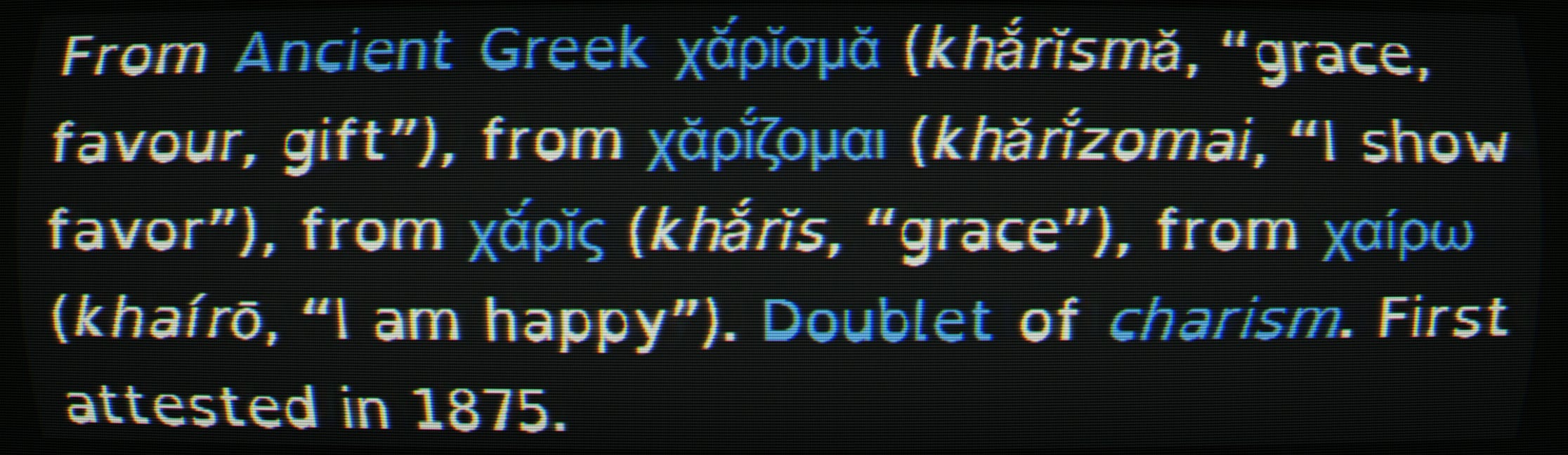
Evoking the charismatic name of Shakespeare should be enough to understand why! The Bard is a perfect example of how the context behind and the medium of a story are just as critical as the vague mood of the listener.
His plays are dramatic to a silly degree. They were originally written specifically to be crowd pleasing and they are strongly valued because of how they entertain audiences to this day.
However, schoolchildren are forced to decode an almost foreign language on a silent page as their first and often only experience of his writing.
For many, Shakespeare is then quickly relegated to the realm of boredom. The charismatic connection found on the stage is completely lost, and the stories are thought of as overrated.
The medium itself creates a barrier of boredom.
Even with this weakened ship cutting through the confusing waves, building a connection breaks down with the right or the wrong spokesperson in the right or wrong medium.
Or more concisely, boredom defined as a failed connection must account for both the messenger and the medium as well.
A Saga of Days
Our current mood still strongly affects any boring reaction.
Given the right context and circumstance, we can be primed to enjoy something we would otherwise sooner put down and throw away.
I remember first making this connection as a teenager while watching the movie Last Days.
A deliberately slow, haunting movie about Kurt Cobain and the moments running up to his untimely death. An angsty theme if there ever were one.
Now, I was also suffering from an extreme lack of sleep when I watched it.
In that dazed state, I could appreciate the drawn-out nature of it all. The subtleties of being pushed in one direction or the other as someone teeters on the razor’s edge.
I also was acutely aware of how it would be difficult for most people to enjoy it unless they were similarly ready to take things extremely slowly. A mood piece meant to capture reality, making everything mundane as a touch of surreal edge.
For many, it’s simply a mediocre, sluggish film. Those who do appreciate it though, do so for the intentionality of making bold choices that not everyone would enjoy.
For them, for me, the slowness is the entire point.
Similarly, I recently finished Vinland Saga, and it’s rare to have felt so disappointed in something. The story loosely follows the historically mythical trail left by Icelandic epics like the Saga of Erik the Red.
I thought that would make it a great addition to the influences impacting what will become Dorus.
Drifting away from the epic inspiration, Vinland Saga is more a commentary on violence, taking the perspective of pacifism being the path of a true warrior. We are thrust into a cruel world filled with misery where war, bloodshed, and betrayal are facts of life.
Soldiers are well adapted to that life and are rewarded spiritually for engaging in the horrors of battle.
It’s all a little over-the-top in my opinion, but the historical roots were interesting and I was curious to see how everything developed.
However, the writer made a very bold choice as the story moved forward. Rather than doubling down on the gruesome nature of England under Danelaw, we are exposed to passive melodrama from the start of the second season.
To be mild, it’s a little controversial among the community. The most common complaints and questions revolve around answers for why it’s so boring. A feeling stemming from the broken contract seemingly established by the prologue of the story.
Now, when it comes to defining boredom and examining taste, there’s an important distinction between the haunting tackiness of Last Days and the stylistic whiplash of Vinland Saga.
There’s an inherent emptiness to the word “boring” when it’s examined closely. Different people call different aspects of both pieces of media boring.
At best, there’s an intensely vague nature to any definition at all.
Last Days is slow by design as the most important aspect of its texture. Vinland Saga makes a statement by suddenly shifting from action and violence to calm melodrama.
Shakespeare bores students in the classroom and captivates audiences on the stage.
These stories and more are all called “boring” for fundamentally different reasons. It’s absurd that countless ruptures between a story and its audience lead to such a word dancing on the tip of our tongues.
That’s probably a part of why I so strongly believe there is a place for intentional slowness.
People will be bored for different reasons and engaged for others. Poor pacing is not simply something that arises from slow scenes. Understanding all this allows a writer to write the story they want to write, the way they want to write it.
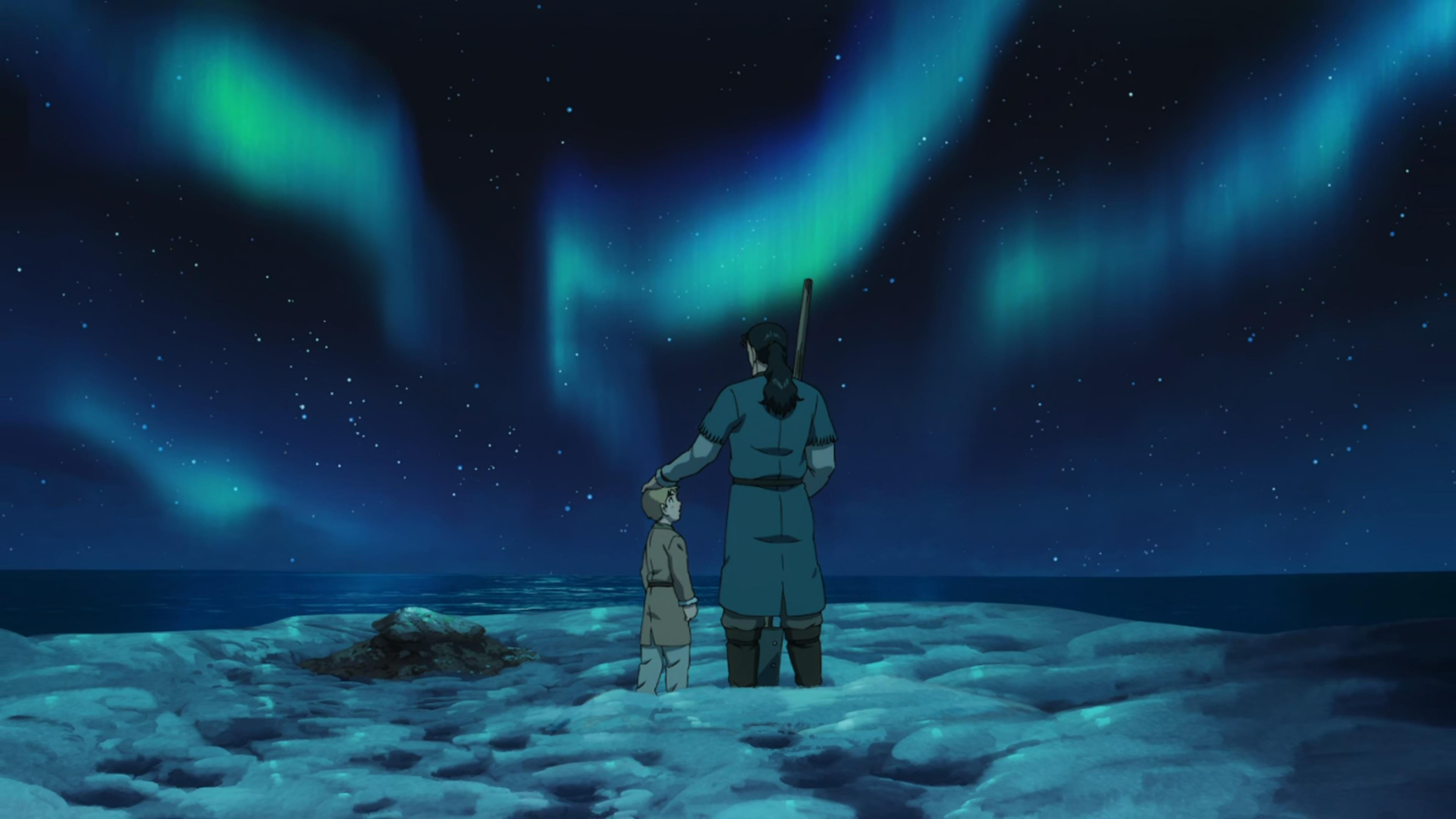
Besides, the best parts of Vinland Saga to me were everything that happens on Iceland. I imagine for many that’s considered the slowest and most boring part of all!
Unintentional Impact
When I first landed in Korea, I needed to wait in a hotel lobby for something or another. Jetlagged and out my mind as a newly caught fish out of water, the clerk behind the counter asked me a question in English with a mistake that I’ll never forget.
“Are you boring?”
I didn’t understand at first. I took it to be a very direct question about my personality and only later figured out she wanted to ask if I was bored in the present progressive tense.
When I realized that, it made me rethink how I define boredom.
Often the reality of that mood mismatch comes down to an excuse.
Finding an acceptable reason for irrational dislike.
Finding an acceptable reason for why we don’t enjoy something we thought we should.
Finding an acceptable reason for wanting to appreciate something at all.
All this tension is instantly released once a single magical word is evoked:
Boredom.
Perhaps that’s unsatisfying, but I don’t believe in value judgments when it comes to personal taste.
Sometimes people just don’t like you.
And there’s nothing you can do about it.
A boring reality if there ever were one.
Until next time,
—JMB
i really appreciate this post! i think it takes a very grounded individual to enjoy boredom. And, yes I agree its definition is dependent on experience, perspective, and a present progressive tense 😂
Love your “Shrek” song in the beginning of this post!!! John’s family’s first DVD , thanks to John’s oldest sister( Xmas gift🎄) Interesting read John ❤️😊